
The idea of India is a timeless one, and has long enticed travellers looking for something more out of their lives. In the recent past, India along with Nepal was the final destination for hippies. It was the land where the trail ran cold, the land you didn’t want to get away from. The last 15 years or so has seen a new kind of traveller (they are not tourists), escape artists of a different kind. If you’re an Israeli, have served your mandatory military tenure, and want to break free from your homeland, eastwards is where you look.

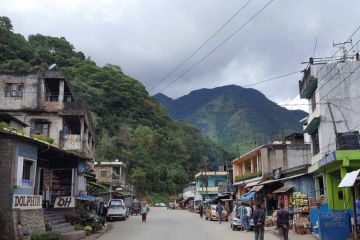
They come in droves, and have formed a parallel travel circuit of sorts. These are no Taj Mahal gawkers, their destinations are small, unknown villages in the Himalayas, obscure coastal villages around Goa, and Vattakanal, an unheard of village near Kodaikanal. Our cover story, “The escape route” takes a look at the Israeli backpackers’ circuit.

Writer Suresh P Thomas who lived for a month in Vattakanal finds that the advent of Israelis has changed village dynamics, made women more assertive, fuelled prosperity, and is in danger of causing environmental harm to the place. As for the Israelis, they have their drugs and magic mushrooms, parties and a bit of contempt for their hosts. It is an attitude that Darya Maoz, an Israeli researcher who has studied the subject calls “neo-colonial”.

Our other reportage is on Burrakatha performers, the travelling storytellers of Andhra Pradesh. Also, we profile Colonel Anil Kaul, a decorated soldier who feels that the Army treats disabled veterans with insensitivity.

Our policing methods haven’t evolved much from the days when the police were a colonial force meant to keep the natives under control. Activist Arun Ferreira who spent four-and-a-half years in prisons of Maharashtra on charges of being a Maoist—and who has been acquitted in all but one ongoing case—recounts his experience as a political prisoner, about the torture methods of the police and the social hierarchies in prison.

Writer Dilip D’Souza tells us how Rahul Dravid is a constant reminder to us of what a strong will can achieve. Our photo story is on the Sundarbans, a land of extreme poverty whose fragile ecosystem is under threat from climate change.

We interview writer Aatish Taseer, who speaks about his narrators, how many Indian writers are apologetic about their land, and about a certain Booker prize winner whose latest salvo against capitalism and corporations graced the cover of a weekly last month.

Saurav Kumar, Editor
saurav@fountainink.in

  • New Articles
  • MOST VISITED

Homeless again

Posted on 4 June, 2013 in Uncategorized

Native and the immigrant

Posted on 4 June, 2013 in Photo Story

THE MARUTI WAY

Posted in Reportage - 226,947 views

Kashmir: From Sufi to Salafi

Posted in Reportage - 16,953 views

Gift This Magazine

4 June 2013 at 03 : 36 AM

Poison pill producer

Posted by in Edit

The kirana store merchant is the stereotype adulterator in popular Indian culture. He adds metanil yellow to turmeric, powdered brick to chilli, stones to rice, and so on. His ...

Read more

8 February 2012 at 10 : 32 AM

A few good doctors

Posted by in Web Specials

In rural Chhattisgarh, haunted by poverty and fragile healthcare, a 55-year-old man weighs only 28kg; an eight-year-old boy will die of rabies because his labourer parents work ...

Read more