Fiction
by Saurav Kumar
Oct 30, 2025
He was reading his latest Hardy Boys mystery when the school bus came to an abrupt halt. It was his stop, the bus had to brake suddenly because a rickshawala pulling two fat, heavily made-up women in saris, had just fainted on the road. There was commotion on the streets, as someone sprinkled water on the man; another more considerate local thug commandeered a glass of sugarcane juice from a seller at the chowk.
An unemployed young man, hair parted in the middle, and dejection written on his face, snapped, “Arre, aunty get down from the rickshaw at least now. Or do you want this man’s corpse to pull you further?”
The women shuffled on the seat, while dabbing their handkerchieves to the melting foundation on their faces, an unintended duet of perfect synchronsiation. They then proceeded to get down, a task they executed with many huffs and puffs and contorting turns, as if they were summiting Everest. The fatter of the two said, “Look, some mangoes have fallen off the carton.”
The other said to the rickshawala, “Will you take us further? You have had water and all now. If you were so weak you should not have accepted passengers. I am saying this for your own benefit.” A cow had sneaked in and had started on the mangoes.
Shantanu, who has been watching it all unfold from the bus window, smiled. It was all so absurd, cruel and funny at the same time, he thought. ‘Absurd’ was his new favourite word, he had heard it for some years now, especially when his father was in one of his moods. But it was only recently that he had started to understand its meaning. “Ridculously unreasonable” was the meaning he loved the best, and he wasn’t sure how but it also seemed to describe him and his life the most.
“Go home,” the bus conductor told him as he was getting down the bus.
On the road, the two women were fanning themselves with their saris, their faces turning redder by the moment. “Let’s get another rickshaw,”one of them said.
“At this rate, I will faint too. The day has been ruined already. I picked those mangoes one by one and now the cow is eating them,” said the other.
He could see home, just a few hundred metres of a downhill-walk away. He gave one last look to the women and started walking. A few steps ahead, he picked up a mango that had rolled further than the rest, turned back and shouted, “Aunty”. When the women turned, he held aloft the mango and waved it at them. Before they could say anything, he laughed and ran. He still had a grin stuck on his face when he opened the gate of his house. He felt cheerful, this was his time. No one was at home, but their live-in domestic help, a kindly old woman who spoke little and let him be. His father was a government clerk and his mother was an accountant at a private firm. They would be home after six, which meant his freedom had some hours left. There was lunch at the dining table, rice, dal, and potato fry, but it didn’t inspire him. Instead, he took out some cold rasgullas from the fridge, saturated with syrup, and gulped them down.
He flung his bag on the floor of his bedroom, kicked the shoes off his feet, took out the book he was reading and dived into the sofa. He looked at the clock, another hour to go before cricket. Another hour to fret about what was in his school bag.
When it was time, he went to the balcony and looked at the massive playground across the road. He could see Chiku at the corner of the playground, and a couple of others strolling towards him. He ran down the stairs, picked up his bat, and made his way to the field.
The team, called the Mosquitoes in the current tournament they were playing, had gathered around the pitch. Shantanu remembered how they had prepared the pitch a few weeks ago. It was one Sunday afternoon’s labour. They had marked the rectangle, and two of the seniors had taken a spade and lightly dug half of it. Another group was extracting soft clay from near an open drain just outside their field. As the youngest, he wasn’t given any task, a rare privilege of age accorded to him. He had, however, taken charge of the rammer. Once they had prepared the surface, a mixture of gravel, soft clay and mud, he started hammering it in. Miku, who was Chiku’s older brother, had crushed some chalk pieces and with the powder marked the pitch and the creases. Then Nishant, the oldest of the group and the default leader, had said they needed to water the pitch. All the boys lined up on both sides of the pitch and then peed on it. There was a lot of backslapping, loud laughter and high fives before they had gone home that day.
Shantanu loved cricket with all his being. The field was his salvation. He loved school, but most teachers weren’t kind to him, a boy who got easily bored, and whose mind was always wandering. For him, something more interesting than the teacher’s lesson was always going on, either around him or inside his head. He was often caned, the missionary school he went to hadn’t yet spared the rod. The pain and punishment he took in good spirit, laughing at his friends who often acted as if their bones had broken with just one thwack of the cane.
Today was a big game, it was the finals of the Sixes and Fours cricket tournament, and a coin toss had decided it had to be held on their pitch. The tournament was the product of the imagination of some neighbourhood chaps, the unemployed ones who dressed up every morning in search of a job, and came in the evenings to the field to smoke away their frustrations. One of them thought of a bright idea to make money: There were more than a dozen cricket teams in and around the fields of the neighborhood. While they played friendly matches with each other, why not create a competition with participation fees? Thus was born the Sixes and Four. When Shantanu had asked his father for the Rs 40 participation fees, he had given it with the warning that he didn’t want cricket to impact his grades in school. Shantanu hoped they would win the tournament. A win may stave off his father’s wrath.
This was his stage now, his senses on fire, his eyes honed in on the next ball. He was Superman.
The Mosquitoes were batting first in the 14-over-a-side game against the Hillside Monsters. A small crowd of the curious and the bored had gathered along the sidelines. The teams’ respective pavilions were the couple of benches placed on either side of the ground. The boundary had been marked with small flags carrying the tournament's insignia—a flying ball.
Shantanu was to bat in the middle order, not his preferred position which was as an opener, but then he was happy to be included at all. His turn at fifth down was to come after the team’s best batters had had their chance.
He watched as his team went about the work. It was a steady flow of runs, few boundaries interspersed here and there, and when a wicket fell, it did so in an unremarkable fashion. No great balls were bowled, no shots were played that stirred the crowd. To a random passerby it would have looked like a serious game of cricket, as boring things often acquire a gravitas of their own.
The score read 76 for five when Shantanu’s turn came in the second ball of the eleventh over. Nishant patted him as he was putting on his gloves, “Play till the last ball, don’t hit from the first.”
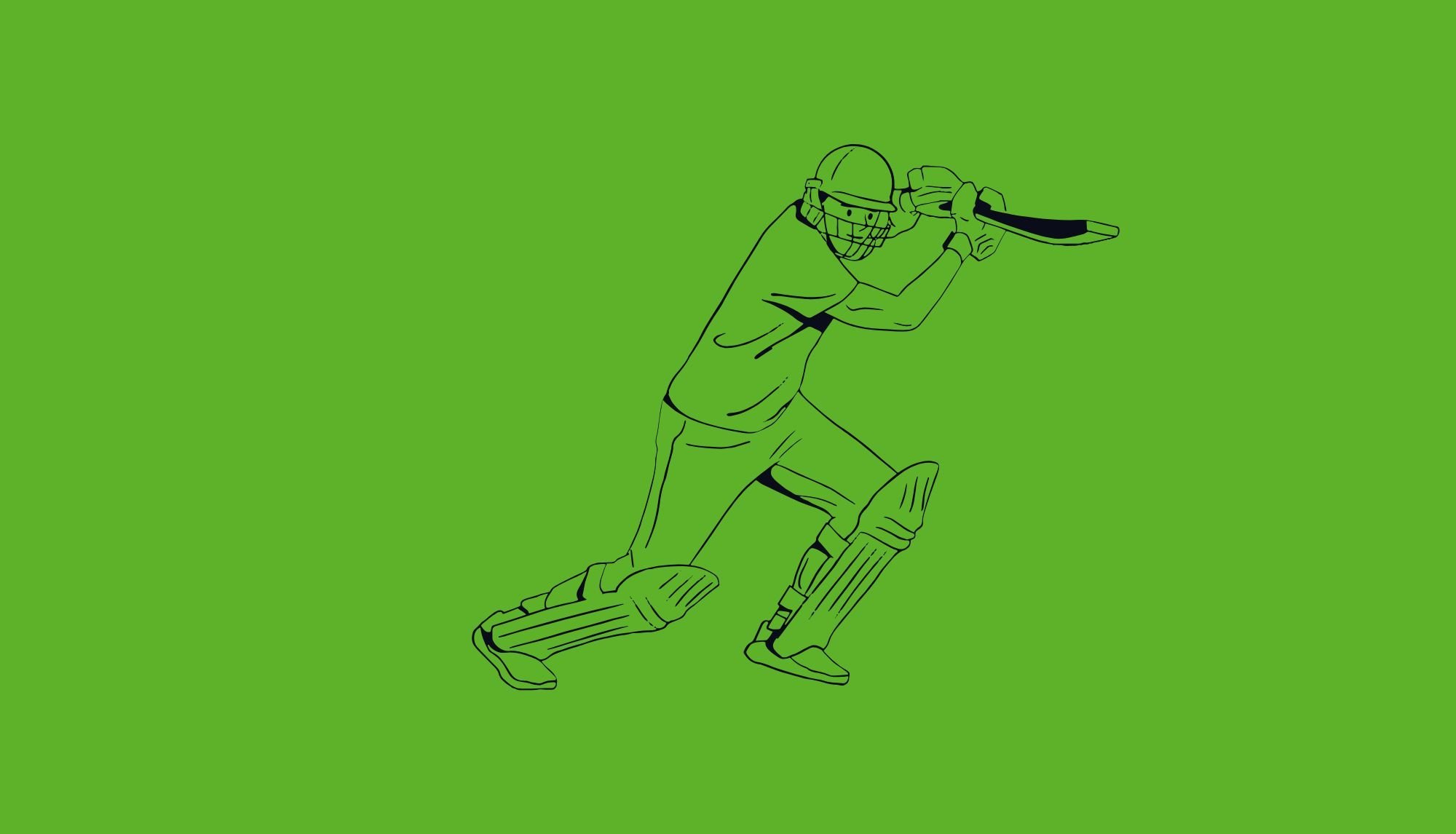
As Shantanu took rapid steps to the pitch, he felt a strange lightness of being. It was as if he was floating, even though his heart was thudding hard. He took guard and got ready to face the offspinner. The shiny red ball came revolving rapidly through the air. He stepped out to drive it, and hit it sweetly towards the cover region. He ran two. The next ball, he flicked fine, and it went for a four. The crowd, silent so far, erupted in claps and whistles. Shantanu felt at peace on the pitch. He had a calm about him, as if everything had slowed down. Before the third ball, he walked on the pitch, tapping it with his bat, feeling the vibrations from the handle. This was his stage now, his senses on fire, his eyes honed in on the next ball. He was Superman. The next ball he cut for a four. His wrists and feet moved in a dance of their own, it was his body and mind’s own orchestra. The music of the ball hitting the bat, feeling it in the gloves, watching the wall whizz through the grass, was there any happiness in the universe that could match this? Cricket was the only thing that was truly his, his private communion with himself. The bat never belittled him, the ball never judged him, it was the one place, the only place, where he was good enough the way he was. He didn’t have to be something or become someone.
He scored a 14-ball 32, including a straight six over the fast bowler’s head, as good as any they show on TV. The crowd had got involved and he returned to a grand welcome. Strangers walked up to him to shake his hand, some hugged him. One of the umpires, once a Ranji probable, came up to him and said, “That was some of the best batting I have ever seen, and I have seen Vishwanath bat.”
It was darker than usual by the time he started walking towards home. He could see that the balcony lights were one, and that meant that his father was back. He was wearing the man-of-the-match medal and carried the winners’ trophy in his hand. As he came closer to home, the buzz of victory started to wind down. There was the matter of the report card. Sitting in his bag for two days, needing his father’s signature. He had failed in Maths, done poorly in Hindi and scored well in science and GK.
After the last exam he had promised his father that he would get all As. He hadn’t meant it then, but what could he do when he saw his father’s eyes full of contempt and anger demanding the vow? How would he become an engineer if he scored like this? How could he ever escape this place? Why could he just not study? Was he a duffer who couldn’t understand things? He read books all the time, so why could he not read his textbooks? Was he born to make his father’s life hell? He remembered all the things his father had said the last time and times prior to that. He couldn't understand why he was so unworthy in his father’s eyes. He could bisect a cricket field with his bat any way he wanted, he could direct a ball coming at pace towards him to any corner of the field, and he knew all about angles, speed, and precision; that had to–must–count for something. It never did.
He opened the gate and gingerly walked up, with dread in his heart. His father was waiting at the living room door, report card in his hands. His mother was standing behind, worry writ on her face.
“This is what you do in school? Of the money that I earn? This is how you thank me,” said the father. “Is this what you call a good result?”
Shantuanu kept his eyes down, his eyes brimming with tears.
“Say something,” shouted his father.”
“We won the tournament and I got the man of the match award,” he blurted, still staring at the carpet.
The next thing he heard was the sound of a slap and his lips spitting blood. His father had struck him hard. He felt the bat being snatched from his hand, heard the cover being ripped. When he looked up, he saw his father smashing the bat on the wall, breaking the toe end of it. The next blow dislodged the handle but not completely. Shantanu was crying now, tears of shame and humiliation, but also of anger, of other overwhelming feelings that he couldn't articulate.
“To hell with cricket,” his father said as he threw away the bat.
His mother came up to him, wiped his tears with her sari, and said, “Don’t make him angry. Why can’t you study hard?”
That night, face swollen and spirit bruised, he slept with his broken and splintered bat, dreaming of one day going far, far away from all of this, to a place where no one broke bats.

Welcome back, Please enter your details

